

- List your property
- Support
- Trips
Communication Center - Members save 10% or more on over 100,000 hotels worldwide when you’re signed in


Executive Hiroshima and Miyajima Island Private Full Day Tour
By Nihon Shine Tours
Free cancellation available
includes taxes & fees
per traveller*
*Get lower prices by selecting more than 2 adults
Features
- Free cancellation available
- 12h
- Mobile voucher
- Instant confirmation
- Multiple languages
Overview
Experience the powerful history of Hiroshima Peace Memorial Park and the Iconic Atomic Bomb Dome. Explore beautiful Miyajima Island and the famous Itsukushima Shrine. A perfect mix of history, culture, and nature. Please book your Hiroshima day tour now for an unforgettable journey.
Activity location
- Atomic Bomb Dome
- 1-10 Otemachi Naka-ku,
- 730-0051, Hiroshima, Hiroshima Prefecture, Japan
Meeting/Redemption Point
- The Tokyo Station Hotel
- 東京ステーションホテル 9
- 100-0005, Chiyoda City, Tokyo, Japan
Check availability
Executive Hiroshima and Miyajima Island Private Full Day Tour
- 12h
Activity duration is 12 hours 12h - English
Price details
Rp17.333.000 x 1 TravellerRp17.333.000
Total
includes taxes & fees
*Get lower prices by selecting more than 2 adults
Until Fri, 8 May
Return to your original page
What's included, what's not
- Private transport
What's included What's included - Hotspot on the Board
What's included What's included - Entrance fee
What's included What's included - Landing and facility fees
What's included What's included - Pickup and Dropoff at the guest's Hotel designated Location.
What's included What's included - Air-conditioned vehicle
What's included What's included - Lunch
What's excluded What's excluded - Alcoholic Drinks
What's excluded What's excluded - Dinner
What's excluded What's excluded
Know before you book
- Infants and small children can ride in a pram or stroller
- Service animals allowed
- Public transport options are available nearby
- Specialised infant seats are available
- Suitable for all physical fitness levels
Activity itinerary
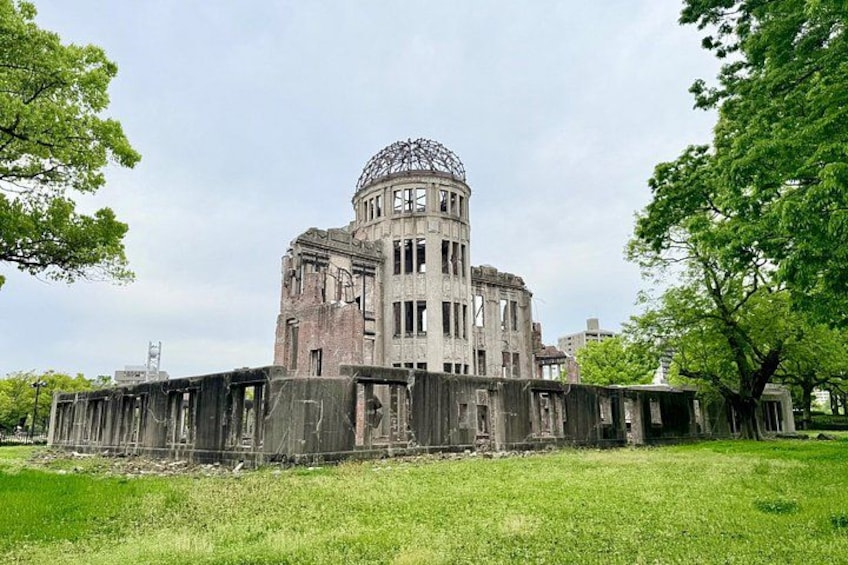
Atomic Bomb Dome
- 30m
The Hiroshima Atomic Bomb Dome is one of the most powerful and symbolic historical sites in Japan. It stands in the centre of Hiroshima Peace Memorial Park and serves as a reminder of the devastation caused by the atomic bomb during World War II.
Originally built in 1915 as the Hiroshima Prefectural Industrial Promotion Hall, the building was designed by Czech architect Jan Letzel.
On August 6, 1945, during World War II, the United States dropped the atomic bomb called Little Boy atomic bombing on Hiroshima.
• The explosion occurred almost directly above this building.
• While most structures were destroyed, parts of this building remained standing.
• It became a symbol of survival and peace.
The ruins have been preserved exactly as they were after the bombing.
• In 1996, it was declared a UNESCO World Heritage Site.
• It represents a global call for the abolition of nuclear weapons.
You can walk around the dome along the river.
Ground Zero
- 30m
The Hiroshima Hypocenter Monument marks the exact spot where the atomic bomb exploded above the city on August 6, 1945.
The “hypocenter” is the point directly below the explosion in the air. The bomb detonated about 600 metres above ground, and this monument shows the location right beneath that blast.
This point experienced the maximum destruction and heat from the bomb.
• Almost everything in the immediate area was destroyed instantly.
• The monument reminds visitors of the human impact at ground zero.
Unlike the Peace Park, this spot is very simple and quiet.
• Many visitors feel it’s one of the most powerful places in Hiroshima because it shows the exact centre of the tragedy.
• People often leave flowers or pause for reflection.
Hiroshima Peace Memorial Park
- 30m
The Hiroshima Peace Memorial Park is a large public park dedicated to the victims of the atomic bomb and a symbol of peace.
It is located in central Hiroshima, in the area that was almost completely destroyed by the atomic bombing on August 6, 1945 during World War II. Today, it has been transformed into a peaceful space filled with memorials, museums, and greenery.
Will remain lit until all nuclear weapons are eliminated
The park is not just historical—it’s a global message:
• Peace and remembrance
• The consequences of nuclear war
• Hope for a nuclear-free world
Hiroshima Peace Memorial Museum
- 30m
- Admission ticket included
The Hiroshima Peace Memorial Museum is the most important place to understand what happened in Hiroshima on August 6, 1945, and its human impact.
Located inside Hiroshima Peace Memorial Park, the museum presents a powerful and emotional account of the atomic bombing and its aftermath.
Models of the city before the bombing
• Detailed reconstruction showing total destruction after the blast
Burnt clothes, watches stopped at the exact blast time
• Lunch boxes and everyday items of victims
Testimonies of hibakusha (atomic bomb survivors)
• Photos and written accounts that make the tragedy very real.
Children's Peace Monument
- 30m
The Children’s Peace Monument is one of the most touching memorials inside Hiroshima Peace Memorial Park, dedicated to the children who died as a result of the atomic bombing.
The monument is inspired by Sadako Sasaki, a young girl who was exposed to radiation at age 2.
• Years later, she developed leukemia (radiation sickness).
• She believed in the Japanese legend that folding 1,000 paper cranes could grant a wish.
• She folded cranes while hoping to recover, but sadly passed away at age 12.
Her storey became a symbol of hope, peace, and the suffering of innocent children.
A statue of a girl (Sadako) holding a golden paper crane above her
• Children figures around the base representing all young victims
• A bell beneath the structure that visitors can ring.
The monument carries a message from children:
“This is our cry. This is our prayer. For building peace in this world.”
Miyajima Port Sambashi Bridge
- 15m
It sounds like you’re referring to the ferry pier/landing area on Miyajima rather than a traditional “bridge.”
The Miyajima Sambashi (Miyajima Ferry Terminal) is the main arrival point on Miyajima Island.
• “Sambashi” (桟橋) in Japanese means pier or wharf, not a bridge.
• All ferries from the mainland arrive here.
A simple pier with waiting areas and shops nearby
• As you approach, you may see the famous Itsukushima Shrine Torii Gate floating in the sea (especially with the JR ferry route)
• Deer often roam freely right near the terminal
There is no famous “Miyajima Sambashi Bridge.”
• If you meant a scenic structure, you might be thinking of the floating torii gate or shrine walkway instead.
Itsukushima Shrine
- 30m
- Admission ticket included
The Itsukushima Shrine is one of Japan’s most iconic and beautiful Shinto shrines, famous for its “floating” appearance on the sea.
• Located on Miyajima Island (officially Itsukushima)
• Originally built in the 6th century and later expanded by Taira no Kiyomori in the 12th century
• Dedicated to three sea goddesses
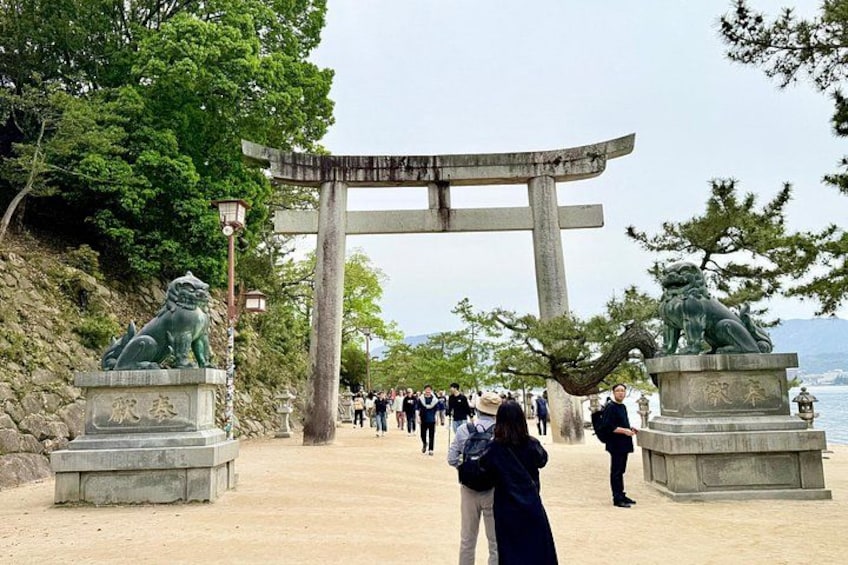
Itsukushima Shrine Torii
- 30m
- Admission ticket included
The Itsukushima Shrine Torii Gate is one of Japan’s most famous landmarks, known for its stunning “floating” appearance in the sea.
Located in front of Itsukushima Shrine
• Originally built in the 12th century during the time of Taira no Kiyomori
• Current structure dates to 1875 (rebuilt several times)
At high tide:
→ The gate appears to float on water (most iconic view)
• At low tide:
→ You can walk right up to it on the seabed
Height: about 16 metres (52 feet)
Made of camphor wood
• Bright vermilion colour (traditional for Shinto shrines)
• Built without being deeply anchored—its weight keeps it stable
• Main pillars are naturally curved tree trunks
Daishoin Temple
- 30m
- Admission ticket included
The Daishoin Temple is one of the most beautiful and spiritually rich temples on Miyajima Island, often less crowded than the famous shrine—but just as impressive.
A Buddhist temple of the Shingon sect
• Located at the base of Mount Misen
• Founded by the monk Kukai (also known as Kobo Daishi)
Much quieter than Itsukushima Shrine
• Surrounded by forest and hills
Hundreds of statues
• Small stone statues (many wearing red hats) line the paths
• Create a unique and spiritual feeling.
You can spin rows of prayer wheels as you walk up
Hidden caves & halls
• Includes a cave with 88 Buddhist icons representing the Shikoku pilgrimage
Miyajima Omotesando Shopping Street
- 30m
The Miyajima Omotesandō Shopping Street (also known as Kiyomori Street) is the bustling main thoroughfare on Miyajima Island, connecting the ferry pier directly to the iconic Itsukushima Shrine. Spanning about 350 metres, this covered arcade is the ultimate destination for enjoying street food and shopping for traditional crafts.
Marvel at the World’s Largest Rice Paddle: Known as the Oshakushi, this massive 7.7-meter wooden paddle was traditionally displayed on the street (though it has recently been relocated to the nearby Miyajima Community Centre).
Watch Momiji Manju being made: You can watch automated machines flip and bake these famous maple-leaf-shaped cakes through shop windows.
Dodge the Local Deer: Friendly but bold wild deer roam the street. Be careful, as they are known to "snatch" paper maps or snacks right out of tourists' hands.
Essential Street Food & Delicacies
The street is a sensory experience, often filled with the aroma of grilled seafood and sweet pastries.
Hiroshima Castle
- 30m
- Admission ticket included
Hiroshima Castle also known as Carp Castle, is a historic landmark in central Hiroshima that served as the home of the daimyo (feudal lord). While the original 1590s structure was a designated National Treasure, it was destroyed by the atomic bomb in 1945. The five-story main keep you see today was reconstructed in 1958 and stands as a symbol of the city's post-war recovery.
As of March 22, 2026, the interior of the main castle tower is permanently closed to the public. This closure was necessitated by ageing and concerns regarding the building's earthquake resistance.
You can still walk through the extensive castle grounds, view the exterior of the tower, and explore the Ninomaru (second circle of defence).
Local authorities are currently discussing a potential wooden reconstruction of the keep to replace the 1958 concrete version.
Location
Activity location
- Atomic Bomb Dome
LOB_ACTIVITIES LOB_ACTIVITIES - 1-10 Otemachi Naka-ku,
- 730-0051, Hiroshima, Hiroshima Prefecture, Japan
Meeting/Redemption Point
- The Tokyo Station Hotel
PEOPLE PEOPLE - 東京ステーションホテル 9
- 100-0005, Chiyoda City, Tokyo, Japan
Best Deals on Things to Do
Experience the wonders of the world up close with great deals on things to do near and far. Expedia offers one-of-a-kind activities that allow you to explore Hiroshima your way. Whether you love nature, culture, food or a bit of adventure, we have the perfect activity for you.
Top experiences in Hiroshima
With so many things to do in Hiroshima, planning the perfect day out may seem like a daunting task. Expedia is here to take the hassle out of finding the best attractions, tours and activities in Hiroshima. Families, couples and business travellers can all find the perfect activity in Hiroshima to create life-long memories with the help of Expedia.