Photo by Sharrie Shaw
Search Family-Friendly Hotels in Tegalrejo
- Change your mindBook hotels with free cancellation
- Be pickySearch almost a million properties worldwide
Check availability on Tegalrejo Family-Friendly Hotels
Our top choices for Tegalrejo family-friendly hotels

9.4 out of 10, Exceptional, (319)
The price is Rp1.890.000
Rp2.286.900 total
includes taxes & fees
11 Jan - 12 Jan

10.0 out of 10, Exceptional, (1)
The price is Rp42.876
Rp54.025 total
includes taxes & fees
16 Jan - 17 Jan

The price is Rp83.633
Rp101.195 total
includes taxes & fees
14 Jan - 15 Jan

9.4 out of 10, Exceptional, (93)
The price is Rp1.780.210
Rp2.154.054 total
includes taxes & fees
10 Jan - 11 Jan
The price is Rp826.446
Rp1.000.000 total
includes taxes & fees
14 Jan - 15 Jan
The price is Rp2.704.033
Rp3.271.879 total
includes taxes & fees
13 Jan - 14 Jan

Hotel O Prawirotaman Near Keraton Yogyakarta Formerly Paris Guesthouse
Hotel O Prawirotaman Near Keraton Yogyakarta Formerly Paris GuesthouseSewon
The price is Rp114.795
Rp138.901 total
includes taxes & fees
3 Feb - 4 Feb

The price is Rp56.528
Rp68.399 total
includes taxes & fees
9 Jan - 10 Jan
Lowest nightly price found within the past 24 hours based on a 1 night stay for 2 adults. Prices and availability subject to change. Additional terms may apply.
Top Tegalrejo Hotel Reviews

Hotel Neo Malioboro by ASTON
10/10 Excellent
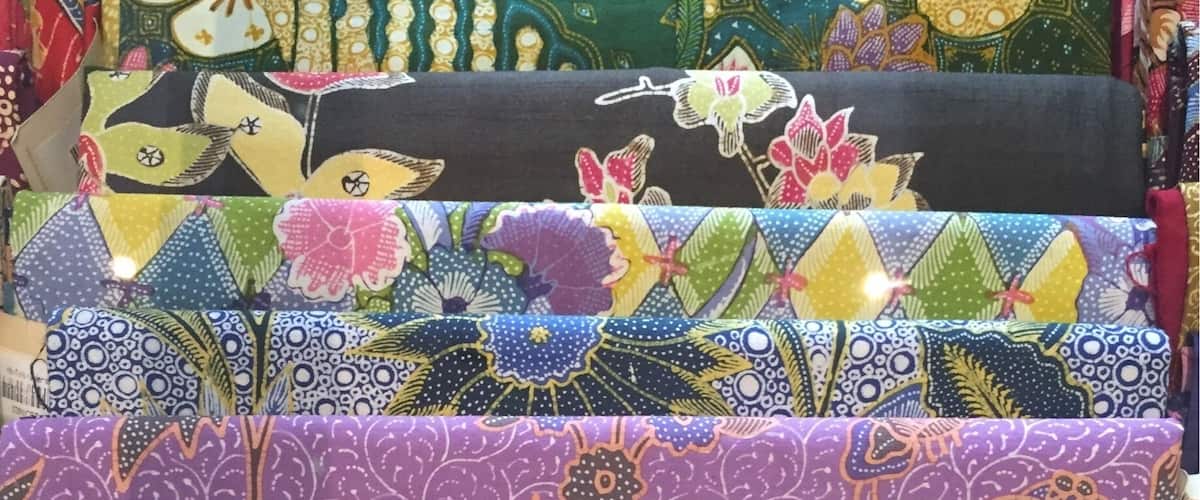
![Batik (Javanese pronunciation: [ˈbateʔ]; Indonesian: [ˈbatɪk]) is a technique of wax-resist dyeing applied to whole cloth, or cloth made using this technique. Batik is made either by drawing dots and lines of the resist with a spouted tool called a canting (IPA: [ʈ͡ʂantiŋ], also spelled tjanting), or by printing the resist with a copper stamp called a cap (IPA: [ʈ͡ʂap], also spelled tjap). The applied wax resists dyes and therefore allows the artisan to color selectively by soaking the cloth in one color, removing the wax with boiling water, and repeating if multiple colors are desired.
A tradition of making batik is found in various countries, including Nigeria, China, India, Malaysia, Philippines and Sri Lanka; the batik of Indonesia, however, is the most well-known. Indonesian batik made in the island of Java has a long history of acculturation, with diverse patterns influenced by a variety of cultures, and is the most developed in terms of pattern, technique, and the quality of workmanship. On October 2009, UNESCO designated Indonesian batik as a Masterpiece of Oral and Intangible Heritage of Humanity.
Source: Wikipedia
These batik clothes are sold at one of the high end hotel's gift shop in Yogyakarta. They are hand drawn and painted and hence command a high price! It ranges over US$200 although some cheap batik at the market can be found for a mere US$2. The difference lies in the quality, the design and also the amount of skill that's needed to make them.
Common batik wear are made from cotton. The ones shown here are silk and limited in quantity produced.
Yogyakarta and Surakata (Solo) are two cities where batik originated in Indonesia.
#unesco](https://images.trvl-media.com/place/1718/09cd56ac-2be9-4518-ac77-e217d037b46b.jpg?impolicy=fcrop&w=1200&h=500&q=medium)